The tables are updated periodically. Every row shows the date it was last checked.
WHAT THE LAW SAYS, CITED AND DATED
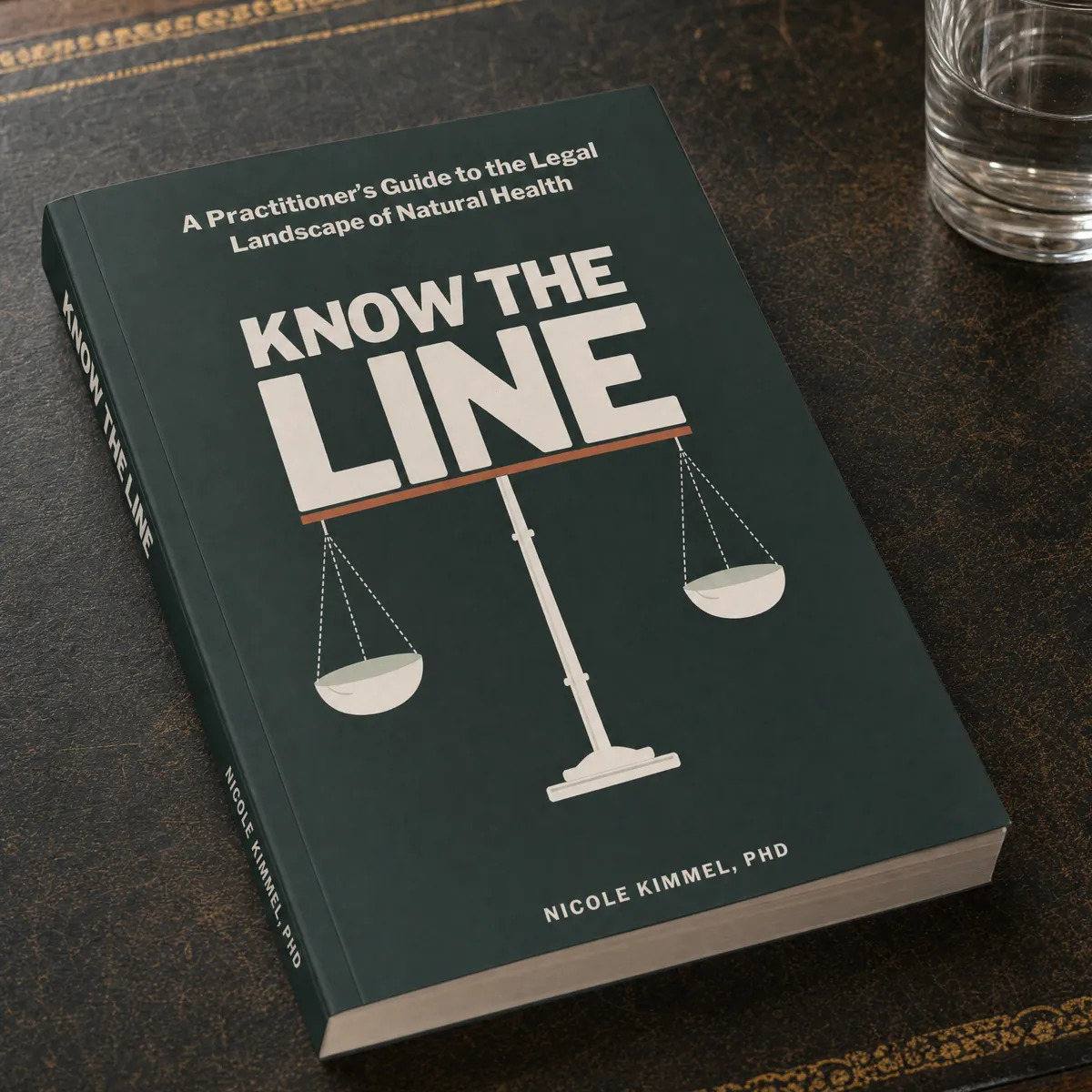
Know the Line is a general educational guide to the laws that affect USA wellness practitioners who work without a state health care license, including health coaches, herbalists, nutrition practitioners, energy workers and bodyworkers.
There is no single national rule for this work. This book reports what federal and state laws say, cited to the original sources and dated. It shows where states agree and where they differ, states plainly when a question has no settled answer, and identifies when to consult an attorney in your state.
A private certification, diploma or association membership is not a state license, and it does not by itself authorize work that a state reserves for licensed professionals. Whether a state's law reaches your work can depend on what you do, the titles you use, what you say to clients and in your marketing, and where your clients are located.
Know the Line is not legal advice and does not replace consultation with a licensed attorney in your state.
What this book contains:
How each state regulates natural health practice. It covers licensing, the eleven safe harbor states, and the laws on titles, nutrition advice and what practitioners say to clients.
The newer areas of legal exposure. It covers advertising and testimonial rules, social media, telehealth, privacy, AI tools and online platforms.
Practice structure and what to do when something goes wrong. It covers business entities, client agreements, records, complaints and contact from regulators.
Why it matters
Practicing In The Gray Zone Is Risky
In unlicensed practice, the words you use with clients and in your marketing can matter as much as what you do.
Believing state exemptions shield all client discussions, assuming verbal disclaimers substitute for statutory compliance, or using therapeutic protocols defined as medical treatment.
Quotes the statutes, regulations and court decisions themselves, dates each one, shows where states agree and differ, and says plainly where a question has no settled answer.
STATE REFERENCE TABLES
The Four Tables
Four tables, one row per state and the District of Columbia, each citing the law it reports and the date it was last checked.
| Table | Topic | What it answers |
|---|---|---|
| Table 1 Click here to view the state table → |
Safe-harbor statutes State exemptions tied to the definition of practicing medicine |
Whether the state has a safe-harbor statute and, if not, what its medical practice act exempts. |
| Table 2 Click here to view the state table → |
Nutrition and dietetics Dietitian licensing, scope triggers, and regulated nutrition practice |
What nutrition/dietetics work is licensed or restricted in that state. |
| Table 3 Click here to view the state table → |
Titles, credentials and degrees Protected titles, credential restrictions, and degree use |
Which titles and degrees the state restricts. |
| Table 4 Click here to view the state table → |
Prohibited and licensed practices Naturopathy’s legal status |
Whether the state prohibits, licenses or registers naturopathy, or has no naturopathy-specific statute. |
Table 1 — Safe-harbor statutes. Whether your state protects unlicensed practitioners from its licensing laws when stated conditions are met — and, where it does not, what its medical practice act exempts.
Table 2 — Nutrition and dietetics. What your state’s dietetics law reserves, which titles it protects, and the exemptions that matter for wellness practitioners.
Table 3 — Titles, credentials and degrees. How your state restricts “doctor,” “Dr.,” medical and naturopathic titles, and the use of academic degrees.
Table 4 — Prohibited and licensed practices. Whether your state prohibits naturopathy outright, licenses or registers it, or has no naturopathy-specific statute.
THE FRAMEWORK
What Each Table Covers
Safe-harbor statutes
Which states have statutes for practitioners who hold no health care license, and the conditions each one sets.
Overview of safe-harbor statutes
State-specific protections
Conditions and limits in each law


Understand laws governing nutrition advice and dietetics practice.
Licensed vs. prohibited practices
State-specific licensing rules
Exemptions in each state's law
How each state restricts “doctor,” “Dr.,” medical and naturopathic titles, and academic degrees.
Permitted titles and credentials
State rules on degree use
Protected titles by state


TABLE 4: PROHIBITED AND LICENSED PRACTICES
Whether your state prohibits naturopathy outright, licenses or registers it, or has no naturopathy-specific statute.
Whether naturopathy is prohibited, licensed, registered, or unaddressed
Licensing or registration status
States with no naturopathy-specific statute.
THE ESSENTIAL GUIDE
Get the Book
What state laws actually say about practicing natural health without a license, cited, dated and honest about what is unsettled.
NATURAL HEALTH ESSENTIAL
Paperback & Kindle edition, with free companion state tables on this site.
Available on Amazon • Every source cited and dated
TRANSPARENCY & CLARITY
Questions About
Updates?
State laws that affect unlicensed practitioners change over time. The book reports the law as of the date each source was checked, and the companion tables on this site are updated periodically. Neither is a substitute for an attorney licensed in your state.
Does this reference manual replace the need for an individual health care attorney?
No. Know the Line is a general educational resource, not legal advice, and it does not create an attorney-client relationship. It reports what the law says, cited and dated, so you can recognize the questions your practice raises. The book marks the points where a reader should speak with an attorney licensed in their own state, and only that attorney can tell you how the law applies to your situation.
How often is the information updated?
The printed book reports the law as of the date each source was checked, and it does not change after publication. The four tables on this site are updated periodically, not on a fixed schedule, and every row shows the date it was last checked against the official source. A law may have changed since that date, so verify the current law in your state before acting.
Is the book written for herbalists, nutrition practitioners and health coaches?
Yes. The book is written for people who work with clients on health without a state health care license, including health coaches, herbalists, nutrition practitioners, energy workers and bodyworkers. It reports how states define diagnosis and the practice of medicine, what the safe-harbor states require practitioners to disclose to clients, and what federal and state law say about supplements and the claims made for them. Where the law is unsettled, the book says so.
How does the book treat safe-harbor states and the other states?
Chapter 4, “The Eleven Safe Harbor States,” reports the laws that eleven states have passed for practitioners who hold no health care license. It quotes what each law protects, the conditions it sets and what it excludes, because the laws do not follow a common standard. Chapter 5, “Practicing in the Other Thirty-Nine,” covers the states without such a law, where the question is what each state’s medical practice act defines and exempts. Table 1 on this site gives each state’s position, with its citation and the date it was last checked.
Does the book cover my state?
The book covers United States law. It discusses the states by topic rather than one chapter per state. The four tables on this site give one row for each state and the District of Columbia, each with its citation and the date it was last checked. The book does not cover the U.S. territories or other countries.
Does a certification or association membership let me practice?
No. A private certification, diploma or association membership is not a state license, and it does not by itself authorize work that a state reserves for licensed professionals. Chapter 2, “License, Certification, Registration,” explains the difference.
Does the book include forms, templates or sample client agreements?
No. Agreements, consent and disclosure are covered in Chapter 19, which reports what the law requires and where it varies. The right documents for your practice depend on your state and your work, and an attorney licensed in your state should prepare or review them.
Does the book recommend any certification, organization or program?
No. The book reports what the law says. It does not assess, endorse or recommend any organization, credential, program, product or service.
I see clients in other states. Does the book cover that?
Yes. Chapter 14, “Telehealth and the Interstate Question,” reports how state laws may apply when you work with clients located in another state, and where that question is unsettled.
What should I do if I receive a complaint or a letter from a state board?
Speak with an attorney licensed in your state before taking any other step. Chapter 22, “How Complaints Actually Start,” Chapter 23, “Contact from the Authorities,” and Chapter 24, “Getting Counsel,” report how these matters begin and how to find counsel.
NEED COUNSEL?
Legal Help for Practitioners
The National Center for Life and Liberty (NCLL) is a fifty-state national law firm. It represents the author’s organizations and provides counsel to practitioners across the country.
© 2026 PracTactics, LLC. General educational information, not legal advice. [email protected]t